Why Thousands of American Expats and Remote Workers Are Landing in Bacolod — And Staying
Photo: Commisceo Global Consulting Ltd, CC BY-SA 4.0, via Wikimedia Commons
A New Kind of Arrival Story
For most passengers, Bacolod-Silay Airport (BCD) is simply a point of transition — a place to collect luggage, hail a ride, and move on. But for a growing number of Americans, the moment their flight touches down on this runway in Negros Occidental marks something far more significant: the beginning of a deliberate, permanent lifestyle shift.
Over the past several years, the airport has seen a quiet but unmistakable transformation in the profile of its arriving passengers. Alongside the returning OFWs and domestic business travelers, there is now a steady stream of Americans — freelance developers, content creators, retired couples, and location-independent consultants — who have chosen Bacolod not as a stopover, but as a home base.
This is the story of how improved air connectivity through BCD has positioned the Bacolod-Silay region as one of the Philippines' most compelling destinations for American expats and digital nomads.
The Airport as a Gateway, Not Just a Terminal
Bacolod-Silay Airport serves as the primary international and domestic air entry point for Negros Occidental. Located approximately 14 kilometers north of Bacolod City, the airport connects the region to Manila via multiple daily flights operated by carriers including Cebu Pacific and Philippine Airlines, with onward international connections available through Manila's Ninoy Aquino International Airport.
For Americans flying from major US hubs such as Los Angeles, San Francisco, or New York, the typical routing involves a transpacific flight to Manila followed by a short domestic connection to BCD — a journey of roughly 20 to 24 hours in total, depending on layover times. While this is not a trivial journey, many expats who have made the move describe it as entirely manageable, particularly given what awaits on the other side of that arrival gate.
The airport's modern terminal, opened in 2008, offers a streamlined arrival experience with immigration processing for international arrivals, baggage claim facilities, and ground transportation options including metered taxis, ride-hailing services, and hotel shuttles. For first-time arrivals, the transition from plane to city is notably smooth compared to the congestion that characterizes larger Philippine airports.
What the Numbers Actually Look Like: Cost of Living in Bacolod
One of the most frequently cited reasons Americans choose Bacolod is the dramatic difference in cost of living compared to major US metropolitan areas. While individual circumstances vary, the general financial picture is compelling.
A comfortable one-bedroom apartment in a well-regarded Bacolod neighborhood such as Lacson or the areas surrounding Ayala Malls Capitol Central typically rents for between $200 and $400 USD per month. A two-bedroom unit suitable for a couple or a remote worker who needs a dedicated office space generally falls in the $350 to $600 range. By contrast, median one-bedroom rents in cities like Austin, Denver, or Seattle routinely exceed $1,500 per month.
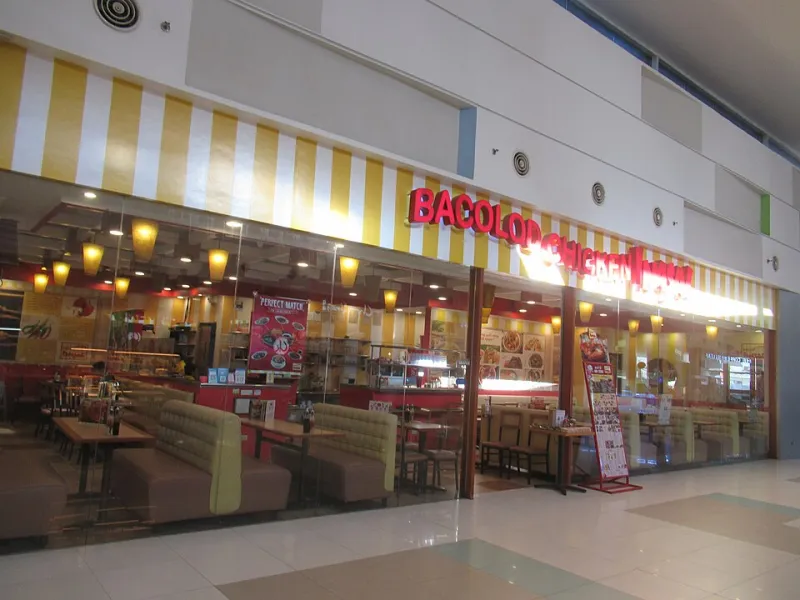
Dining out is similarly affordable. A full meal at a local Filipino restaurant — the kind of place serving fresh seafood, chicken inasal, and rice — often costs between $2 and $5 USD per person. Even at mid-range restaurants catering to an international clientele, a dinner for two with drinks rarely exceeds $20. Groceries at local markets are priced accordingly, and imported goods are available at larger supermarkets for those who prefer familiar brands.
Healthcare represents another significant advantage. Bacolod is home to several well-regarded private hospitals, including The Doctors' Hospital and Corazon Locsin Montelibano Memorial Regional Hospital, where consultation fees and procedures are a fraction of US costs. Many American expats report accessing high-quality dental and medical care for amounts that would not cover a single co-pay back home.
For a single American living modestly but comfortably — with reliable internet, a decent apartment, regular dining out, and occasional travel within the Philippines — a monthly budget of $1,000 to $1,500 USD is generally considered sufficient. Couples tend to manage well on $1,800 to $2,500.
Visa Pathways for Americans
Understanding your legal status is essential before committing to any long-term relocation. The good news for American passport holders is that the Philippines offers a relatively straightforward entry framework.
Upon arrival at BCD, US citizens are typically granted a 30-day visa-free stay, which can be extended at the Bureau of Immigration. The most common approach for long-term residents is the tourist visa extension system, which allows stays of up to 36 months through a series of extensions processed at regional immigration offices. The cost of each extension is modest, and the process, while bureaucratic, is well-documented by the expat community.
For those seeking a more permanent arrangement, the Philippine Retirement Authority (PRA) offers the Special Resident Retiree's Visa (SRRV), which is available to Americans aged 35 and older who meet specific deposit requirements. This visa provides indefinite stay privileges and multiple-entry benefits, making it a popular choice among retired Americans.
Digital nomads on shorter stays typically cycle through tourist visa extensions while maintaining their US-based income streams. It is advisable to consult with a Philippine immigration attorney or a reputable visa assistance service before finalizing any long-term plans.
The Bacolod Lifestyle: What Draws People In
Beyond the financial calculus, the Americans who settle in Bacolod consistently cite intangible qualities that are difficult to quantify but impossible to ignore.
The city itself is medium-sized — large enough to offer modern conveniences, shopping malls, international restaurants, and reliable fiber internet infrastructure, but small enough to feel navigable and human-scaled. Traffic, while present, does not approach the gridlock common in Manila or Cebu. The pace of daily life is noticeably more relaxed.
English is widely spoken throughout Negros Occidental, a legacy of the Philippine educational system that makes daily communication remarkably accessible for Americans. Locals in Bacolod are known for their warmth and hospitality, and the city's reputation as the "City of Smiles" — a moniker reinforced by the famous MassKara Festival each October — reflects a genuine cultural disposition toward openness.
The food culture deserves particular mention. Bacolod is widely regarded as one of the Philippines' premier culinary destinations, with chicken inasal (a marinated grilled chicken preparation unique to the region) recognized as a national dish. The city's dining scene ranges from street-side barbecue stalls to well-appointed restaurants, and the quality of fresh produce, seafood, and local ingredients is exceptional.
Practical Tips for Americans Considering the Move
For those seriously evaluating a relocation to the Bacolod-Silay region, a few practical considerations are worth addressing before booking that first flight into BCD.
First, visit before committing. A 30-day exploratory trip — during which you stay in a short-term furnished apartment, test local internet speeds, explore neighborhoods, and assess daily logistics — is strongly recommended. Many expats describe their first visit as the turning point that confirmed or revised their expectations.
Second, connect with the existing expat community. Bacolod has an established network of foreign residents, with active groups on social media platforms where practical advice, housing recommendations, and local insights are freely shared.
Third, ensure your income source is genuinely location-independent before departure. The Philippines' banking system is accessible, and international transfers through services like Wise are widely used by expats, but confirming that your professional and financial arrangements function smoothly from abroad is essential groundwork.
Finally, familiarize yourself with BCD's flight schedules and Manila connection options. Understanding the domestic routing through your primary international gateway — whether that is LAX, SFO, or another major hub — will make your initial arrival and subsequent travel in and out of the region far more manageable.
The Runway Is Just the Beginning
Bacolod-Silay Airport is, at its most functional, a piece of transportation infrastructure. But for the Americans who have passed through its arrival gates and decided to stay, it represents something more: the threshold between one life and another. The flight in is the easy part. What follows — the slower mornings, the lower bills, the unexpected sense of community — is what keeps them from booking the return trip.