Smoother Entry, Less Scrutiny: What US Travelers Should Know About Clearing Immigration at Bacolod-Silay Instead of Manila
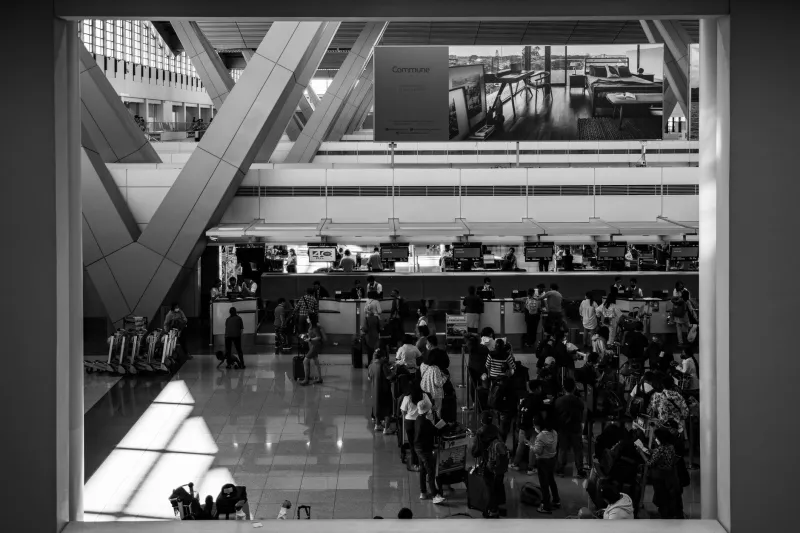
For most Americans planning a trip to the Philippines, the default assumption is that Manila is the entry point. It is where the big international flights land, where the connecting routes fan out, and where, in theory, everything is centralized. What that assumption overlooks is the experience of actually clearing immigration at Ninoy Aquino International Airport — long queues, overworked officers, inconsistent processing times, and an environment that can feel more like managed chaos than a welcoming gateway.
Bacolod-Silay Airport (BCD) offers a different picture. Travelers who route through regional carriers or connect via Cebu, Manila, or other Philippine hubs to reach BCD consistently report a calmer, more efficient immigration experience. Whether that translates into a measurably higher likelihood of smooth entry is a question worth examining carefully — because the answer, while nuanced, is genuinely useful for anyone planning Philippines travel from the United States.
Volume Is the Variable That Changes Everything
Immigration processing at any port of entry is fundamentally a function of throughput. The more passengers an officer processes per shift, the less time each individual interaction receives. At NAIA, immigration officers handle thousands of arrivals daily across multiple terminals, many of them international long-haul passengers arriving simultaneously on wide-body aircraft.
Bacolod-Silay, by contrast, is a regional airport. Its passenger volumes are a fraction of Manila's, and its international traffic — while growing — remains modest relative to the country's primary hubs. That lower volume has practical consequences. Officers have more time per passenger. Lines move faster. The overall atmosphere is less pressured.
Travel consultants who work with US clients relocating to or frequently visiting the Visayas region note that this volume differential is not trivial. When an immigration officer is not managing a queue of 200 people behind you, the interaction tends to be more conversational and less transactional — which, for travelers who are well-prepared, is an advantage.
What "Smooth Entry" Actually Means at BCD
It is important to be precise here. The Philippines does not issue tourist visas in the traditional sense to most American passport holders. US citizens are typically granted a visa-free entry allowance of 30 days upon arrival, which can be extended through the Bureau of Immigration. What immigration officers at any Philippine port of entry are evaluating is whether your documentation supports the stated purpose and duration of your visit.
At BCD, that evaluation tends to proceed without the delays and secondary referrals that some travelers encounter at busier airports. Immigration consultants who advise US expats moving to Negros Occidental emphasize that the documentation standards are identical at every Philippine port of entry — there is no formal advantage built into the system for regional airports. The practical difference lies in how those standards are applied when officers are not under the same volume pressure as their counterparts in Manila.
What this means for you as a traveler is that having your documents in order matters everywhere, but the margin for error at BCD is somewhat more forgiving in terms of the time available to clarify any questions.
The Documentation Baseline Every US Traveler Should Meet
Regardless of which airport you enter through, immigration officers in the Philippines are looking for a consistent set of supporting materials. Experienced travelers and immigration consultants consistently recommend the following:
A confirmed onward or return ticket. This is perhaps the single most important document beyond your passport. Officers want evidence that you intend to leave the country within your authorized stay. A printed or digital confirmation with your name, flight number, and departure date satisfies this requirement clearly.
Proof of accommodation. Hotel reservations, an Airbnb confirmation, or a letter of invitation from a Philippine resident all serve this purpose. For travelers staying with friends or family in the Bacolod area, a signed letter from your host along with a copy of their Philippine ID is a reasonable precaution.
Sufficient funds evidence. While officers rarely ask for bank statements, having them accessible — either printed or on your phone — demonstrates financial self-sufficiency for the duration of your stay.
A valid passport with adequate remaining validity. The Philippines requires at least six months of passport validity beyond your intended departure date. Verify this before you book.
Why Regional Entry Points Attract a Different Traveler Profile
One factor that experienced travel agents point to is the traveler demographic that typically routes through BCD. Passengers arriving at Bacolod-Silay are, by and large, purposeful travelers — people visiting family, returning expats, business travelers with regional ties, or tourists who have done enough research to identify Negros Occidental as a specific destination rather than a generic stopover.
This self-selecting quality means that the average passenger arriving at BCD tends to arrive with cleaner documentation and clearer stated purposes than the broader cross-section of arrivals at a major international hub. Officers at regional airports develop familiarity with the typical traveler profile passing through their facility, which can create a more predictable and efficient processing environment for those who fit that profile.
Timing Your Arrival to Avoid Peak Processing Periods
Even at a smaller airport, arrival timing matters. BCD sees its busiest periods coinciding with domestic flight peaks — typically mid-morning and late afternoon. If your connecting flight from Manila or Cebu gives you scheduling flexibility, arriving during off-peak hours (late morning or early evening on weekdays) generally means shorter queues and more relaxed processing conditions.
Holiday periods — particularly around Christmas, Holy Week, and the Masskara Festival in October — bring elevated passenger volumes to BCD. Planning your entry outside these windows, if your itinerary allows it, is a straightforward way to preserve the low-volume advantage that makes BCD appealing in the first place.
The Honest Assessment: What BCD Can and Cannot Do for You
No airport, regardless of its size, will compensate for incomplete documentation or misrepresented travel purposes. Philippine immigration officers are trained professionals, and the regulatory framework they operate under is consistent nationwide. The advantage of entering through Bacolod-Silay is not a shortcut or a loophole — it is an environmental condition that rewards prepared travelers.
For US travelers who have done their homework, carry the right documents, and are visiting Negros Occidental for legitimate tourism, family visits, or business purposes, BCD offers a genuinely more pleasant and efficient entry experience than the alternatives. That is not a small thing when you have just completed a 20-plus-hour journey from the United States.
The Bacolod-Silay Airport is designed to serve as a functional, welcoming gateway to one of the Philippines' most distinctive regions. Treating your entry documentation with the same care you bring to booking your flights and accommodations ensures that the gateway functions exactly as it should — smoothly, efficiently, and without unnecessary delay.