Conference Ready: How Bacolod-Silay Airport Gives US Corporate Groups a Logistical Edge Over Manila
For US corporate travel managers and conference organizers, the Philippines has long meant one thing at the airport level: Ninoy Aquino International Airport in Manila. NAIA is the default, the assumed entry point, the hub that anchors almost every itinerary. But that assumption is costing companies time, money, and productivity in ways that rarely appear on a travel budget spreadsheet.
Bacolod-Silay Airport — IATA code BCD, located in Negros Occidental — is changing the calculus for groups willing to reconsider the conventional routing. For delegations traveling to the Visayas region, for conferences hosted in or near Bacolod City, and for corporate retreats seeking a more manageable logistics footprint, BCD presents a genuinely competitive case. The numbers, the infrastructure, and the ground experience all point in the same direction.
The Manila Problem No One Talks About in the Itinerary
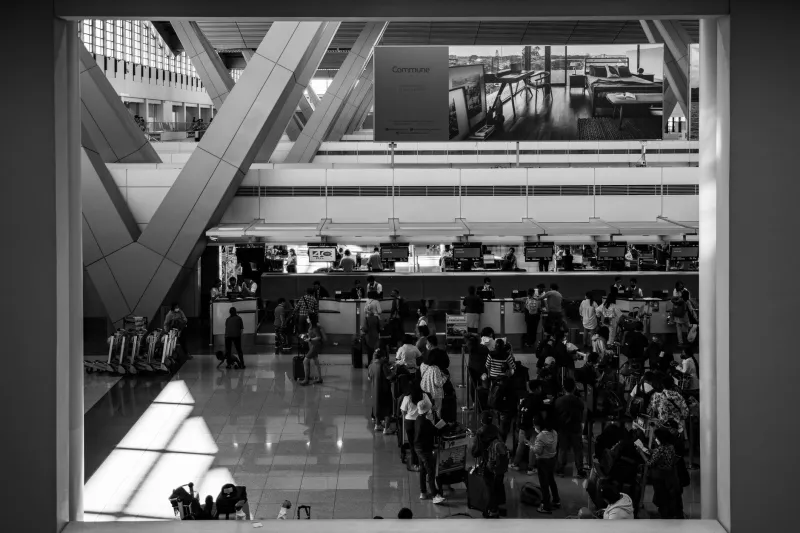
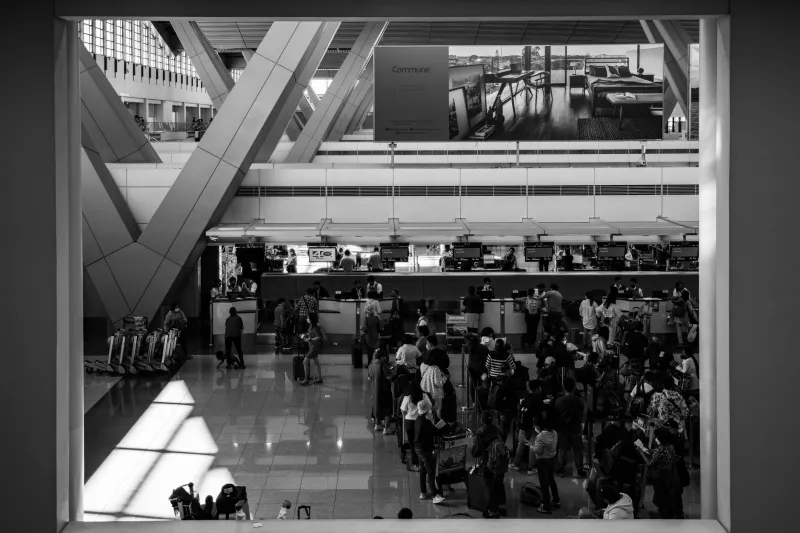
Every seasoned Philippines traveler knows the Manila bottleneck, even if they rarely quantify it. NAIA consistently ranks among Asia's most congested airports. Average ground times — from wheels down to cleared arrivals hall — can stretch well beyond 90 minutes during peak periods, and that figure does not account for the additional hour or more often required to navigate the airport road network during Metro Manila traffic.
For a group of 20 or 30 corporate travelers arriving for a multi-day conference, that lost time is not trivial. If the final destination is Bacolod or anywhere in the Western Visayas, the Manila routing adds a domestic connection on top of the international arrival — meaning another terminal transfer, another check-in queue, and another boarding process before the group even reaches its intended location.
BCD eliminates several of those friction points entirely. International connections via regional hubs — including Cebu and select routing through other Southeast Asian gateways — can place a US delegation directly into Bacolod-Silay with far less cumulative ground time than the Manila alternative.
What BCD's Scale Actually Means for Group Travel
The airport's regional footprint, which some travelers initially view as a limitation, becomes a structural advantage for corporate groups. Smaller passenger volumes translate directly into shorter immigration queues, faster baggage claim cycles, and a ground-side experience that does not require a logistics coordinator just to manage the arrivals process.
For event planners coordinating large delegations, this matters at a practical level. When 25 executives land at BCD, they move through the terminal as a coherent group. Ground transportation can be staged immediately outside the terminal without the multi-vehicle coordination chaos that characterizes NAIA pickups. The airport's layout is legible, the signage is clear, and the process from aircraft door to waiting vehicle is measured in minutes rather than the unpredictable half-hour-to-two-hour range that Manila arrivals can produce.
That predictability has real financial value. It allows ground coordinators to confirm pick-up windows with confidence. It allows conference schedules to be built around actual arrival times rather than padded estimates. And it reduces the hidden cost of executive time spent standing in queues rather than preparing for the meetings that justified the trip.
Negros Occidental's Business Infrastructure Is No Longer a Secondary Option
Part of what has historically kept Bacolod off the corporate conference map is a perception — now increasingly outdated — that the city lacks the hotel inventory, meeting facilities, and business services to support large professional gatherings. That picture has shifted substantially over the past decade.
Bacolod City now hosts a range of hotel properties with dedicated conference and events infrastructure, including ballroom-scale meeting rooms, breakout spaces, and audiovisual capabilities that meet the expectations of international corporate clients. The city's relatively lower cost base compared to Metro Manila means that per-delegate conference costs — room rates, catering, event space rental — frequently come in well below comparable Manila packages.
For US companies running regional Asia-Pacific summits, incentive travel programs, or multi-day leadership retreats, that cost differential can be meaningful at scale. A 50-person conference that saves $150 per delegate per night on accommodation alone represents $7,500 daily in direct savings — before factoring in the reduced ground transportation complexity and the productivity recaptured from shorter transit times.
Routing Strategy for US Delegations
The practical routing question for US-based groups is how to reach BCD efficiently from American departure cities. The most established pathway involves a connection through a major Asian gateway — most commonly Cebu via Cebu Pacific or Philippine Airlines — with onward service to Bacolod-Silay. Travelers from the US West Coast, particularly Los Angeles, have the most direct access to this routing given existing transpacific frequency.
For groups departing from secondary US markets — cities like Denver, Dallas, Houston, or Atlanta — the connection architecture adds one additional domestic US segment, but the total elapsed travel time to BCD often remains comparable to routing through Manila once the NAIA ground time and domestic connection are properly accounted for.
Corporate travel managers should work with their preferred agency partners to model the full door-to-door time comparison rather than relying on flight duration alone. The gate-to-gate number frequently favors Manila on paper, while the reality on the ground — particularly during peak travel periods — tells a different story.
Pre-Trip Logistics Worth Building Into Your Group Plan
For conference organizers bringing US delegations to BCD for the first time, several logistical considerations are worth building into the planning timeline.
Coordinated arrival windows are easier to manage at BCD than at Manila precisely because the airport operates at a scale where group handling is a realistic expectation rather than an exception. Liaising with the airport's ground services team ahead of large arrivals is straightforward and typically yields better-staged reception logistics than attempting the same coordination at NAIA.
Ground transportation from BCD to central Bacolod runs approximately 20 to 30 minutes under normal traffic conditions — a consistent, plannable window that conference schedules can be built around with confidence.
Visa and entry documentation requirements for US passport holders entering the Philippines are consistent regardless of the port of entry. BCD processes US arrivals under the same framework as Manila, and the practical experience of clearing immigration at a lower-volume airport is, by most accounts, notably smoother.
Contingency planning for flight disruptions is worth a brief mention. Typhoon season in the Philippines runs roughly from June through November, and Negros Occidental is not immune to weather-related delays. Building schedule buffers around weather-sensitive travel windows is a standard precaution for any Philippines itinerary.
Rethinking the Default
The corporate travel industry runs on defaults. Manila is the Philippines default because it has always been the Philippines default. But defaults deserve periodic reexamination, particularly when the underlying conditions — airport infrastructure, business district development, routing options, cost structures — have changed as meaningfully as they have in Negros Occidental over the past several years.
For US corporate groups whose Philippine itineraries center on the Visayas region, or who are open to Bacolod as a conference destination in its own right, BCD offers a logistical profile that Manila simply cannot match at the ground level. Shorter queues, faster ground times, predictable transportation windows, and a city that has grown substantially to meet international business expectations — these are not minor conveniences. They are the building blocks of a more productive, less friction-laden corporate travel experience.
The next time a Philippines conference is on the planning table, it is worth asking whether Manila is the right answer — or simply the familiar one.