Beyond the Airfare: A Full-Cost Breakdown That Shows Why Bacolod-Silay Beats Manila for Budget-Conscious US Travelers
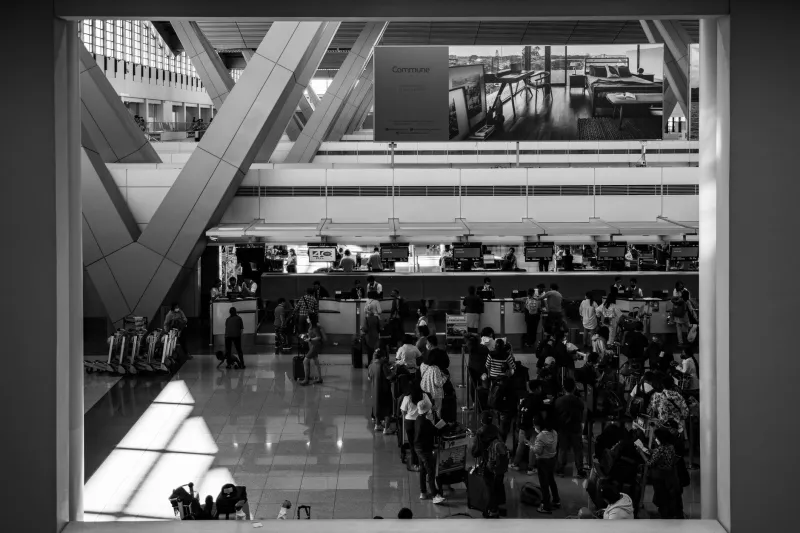
When American travelers begin planning a trip to the Philippines, the instinct is to open a flight search engine, sort by price, and treat the cheapest fare to Manila as the obvious starting point. It is a reasonable instinct — but it is also an incomplete one. The total financial picture of a Philippines trip extends far beyond the moment you clear immigration, and for travelers whose destination is Negros Occidental, the numbers tell a story that may surprise you.
Flying into Bacolod-Silay Airport (BCD) instead of Ninoy Aquino International Airport in Manila can represent meaningful savings not just on a single line item, but across virtually every category of travel spending. Here is how that math actually works.
The Airfare Gap Is Smaller Than You Think
The assumption that Manila fares are always cheaper than regional Philippine airports deserves scrutiny. On major US gateway routes — Los Angeles, San Francisco, and increasingly secondary hubs like Dallas and Seattle — the price differential between a routing that connects through Manila and one that connects through Cebu or directly into BCD has narrowed considerably over the past several years.
When you factor in booking flexibility, seasonal pricing, and the growing number of carriers adding Southeast Asian capacity, the fare premium for a Bacolod-Silay routing often falls in the range of $50 to $150 round trip compared to a Manila landing. On a two-week trip for a couple, that gap is roughly $25 to $75 per person per week — a number that becomes almost irrelevant once you run the rest of the comparison.
For travelers connecting through Asian hubs such as Taipei, Seoul, or Hong Kong, domestic Philippine carriers including Cebu Pacific and Philippine Airlines offer competitive onward fares to BCD that, when bundled intelligently, produce total routing costs that rival or undercut Manila-only itineraries.
Ground Transportation: Where Manila Starts Losing Ground Fast
This is where the comparison becomes genuinely striking. A traveler landing at NAIA in Manila who is ultimately headed to Bacolod faces a multi-step logistics problem: navigate one of Asia's most congested airports, arrange an airport transfer into the city or to a domestic terminal, purchase a separate domestic ticket, and then complete a second arrival process at BCD. In time, that sequence typically costs four to six additional hours. In money, it costs considerably more.
A conservative estimate for the Manila-to-Bacolod domestic leg runs between $30 and $70 per person each way depending on booking timing and carrier. Add airport transfers in Manila — which, accounting for traffic, can run $15 to $30 by ride-hail or metered taxi — and the ground transportation premium for a Manila entry point easily reaches $90 to $200 per person round trip before you have left an airport.
Travelers arriving directly at BCD, by contrast, step out of the terminal and into a ground transportation environment that is straightforward, affordable, and short. The drive from Bacolod-Silay Airport to central Bacolod City runs approximately 30 to 45 minutes by private van or shuttle, with costs typically ranging from $4 to $12 depending on the service type. The contrast in both stress and expenditure is substantial.
Accommodation Pricing in Bacolod vs. Manila
Negros Occidental's accommodation market operates at a meaningfully different price point than Metro Manila, and that gap rewards travelers who base themselves in the region rather than passing through the capital. In Bacolod City, a well-reviewed midrange hotel — the kind that an American traveler would recognize as clean, comfortable, and professionally managed — typically runs between $35 and $65 per night. Boutique properties with strong amenities often fall in the $60 to $90 range.
Comparable quality in Manila's more convenient districts, such as Makati or BGC, commands $80 to $150 per night or more for equivalent standards. For a 10-night stay, that differential — conservatively estimated at $40 to $60 per night — represents $400 to $600 in accommodation savings alone. That is not a marginal number. For many American travelers on a fixed trip budget, it is the difference between upgrading an experience and cutting one short.
Airport Retail and Dining Markups: A Smaller but Real Factor
Large international airports operate on a captive-consumer model. Travelers at NAIA or any major Asian hub airport understand intuitively that a bottle of water costs more inside the terminal than outside it. At BCD, the scale of the facility means that the captive-pricing dynamic is considerably more muted. Dining options near the airport and within Bacolod City itself reflect regional pricing rather than the inflated margins of a major hub.
A full meal at a well-regarded local restaurant in Bacolod will typically run an American traveler between $5 and $12, including a drink. Equivalent dining in Manila's commercial districts runs $12 to $25 for similar quality. Across a two-week trip with three meals daily, the cumulative difference in food costs alone can approach $150 to $300 per person — another category where the regional entry point quietly compounds its advantage.
The Compounding Effect: Running the Full Numbers
To make this concrete, consider a hypothetical 12-night trip for two American travelers whose destination is Negros Occidental. Using conservative estimates across every category:
- Airfare premium for BCD routing: +$100 per person ($200 total)
- Avoided Manila domestic connection: savings of $140 per person ($280 total)
- Avoided Manila airport ground transfers: savings of $60 per person ($120 total)
- Accommodation savings over 12 nights: savings of $50 per night ($600 total)
- Dining savings over 12 days: savings of $15 per person per day ($360 total)
The net result in this scenario: choosing BCD as the entry point saves approximately $1,160 compared to a Manila-routed itinerary, after accounting for the higher airfare. The savings figure grows further if the travelers are staying longer, dining out frequently, or occupying higher accommodation tiers where Manila's pricing premium is even more pronounced.
What This Means for How You Should Plan
The practical implication for American travelers is that the search for value in a Philippines trip should not begin and end at the flight booking stage. Regional airports like Bacolod-Silay exist within an ecosystem of lower costs that rewards travelers who think holistically about their itinerary.
For travelers whose primary interest is Negros Occidental — its beaches, its food culture, its growing expat and digital nomad communities — routing through BCD is not a compromise or a second-best option. It is the financially superior choice, and the data supports that conclusion across multiple spending categories simultaneously.
The next time you are comparing flight options to the Philippines, resist the instinct to optimize for the cheapest fare to Manila and consider what happens to your budget after you land. In many cases, Bacolod-Silay Airport is not just a more convenient entry point — it is a more economical one, from the moment your wheels touch down to the last meal before you fly home.