Shifting Flight Paths: How Bacolod-Silay Is Quietly Reshaping Airline Strategy in the Philippines

For most American travelers, the Philippines has long meant one thing at the entry point: Manila. Ninoy Aquino International Airport (NAIA) has served as the default gateway for decades, absorbing international arrivals and routing passengers onward to provincial destinations like Negros Occidental. But within aviation planning circles, a quieter conversation has been building—one that centers on Bacolod-Silay Airport (BCD) and whether the country's hub-and-spoke orthodoxy is due for a serious revision.
The forces behind this shift are neither sudden nor superficial. They reflect a convergence of infrastructure investment, operational performance data, and a growing recognition among regional carriers that secondary airports in the Philippines are no longer secondary in capability.
Why Manila's Dominance Is Under Pressure
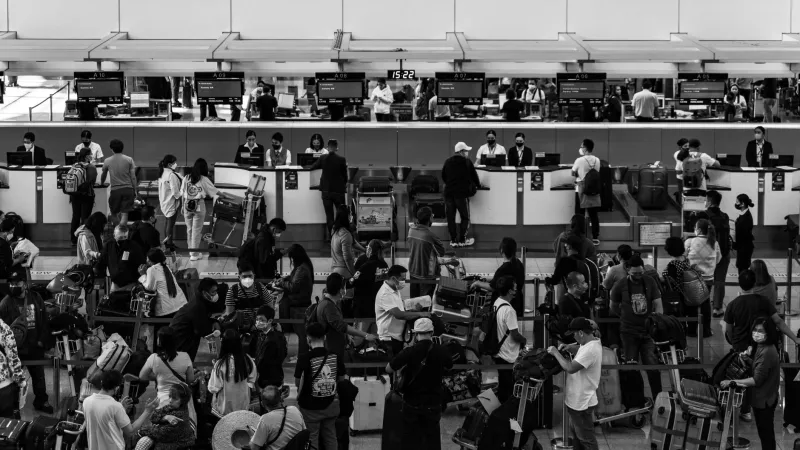
NAIA has operated near or beyond its practical capacity for years. The airport handles tens of millions of passengers annually through a terminal system that was not designed to accommodate modern traffic volumes at this scale. Slot constraints, ground delays, and irregular operations have become structural features rather than occasional inconveniences. For airlines managing tight turnaround windows and fuel efficiency targets, these friction points translate directly into cost.
Aviation consultant and regional analyst Rafael Mendez, who advises Southeast Asian carriers on fleet deployment, framed the issue plainly in a recent industry briefing: "Manila is not a hub problem—it is a saturation problem. Airlines that depend entirely on NAIA for Philippines access are absorbing inefficiencies that compound across every rotation. The question being asked now is whether there is a viable alternative network that can carry some of that load."
Bacolod-Silay is increasingly part of that answer.
What BCD Offers That Larger Hubs Cannot
Barangay Silay City hosts an airport that, by Philippine standards, operates with a degree of procedural predictability that larger terminals struggle to match. Gate utilization rates are higher relative to aircraft movements. Ground handling turnaround times are consistently shorter. And the airport's physical layout—purpose-built to modern specifications when it opened in 2008 and progressively upgraded since—supports efficient passenger flow without the bottlenecks endemic to legacy terminal designs.
For narrowbody and regional jet operations, these characteristics matter considerably. Aircraft like the Airbus A320 family and ATR turboprops, which form the backbone of Philippine domestic and short-haul international routes, perform better economically when ground time is minimized. BCD's operational profile supports that objective in ways that NAIA's congested aprons frequently do not.
Beyond the physical plant, the airport benefits from its location within Negros Occidental—a province with a diversified economic base that includes agribusiness, manufacturing, and a growing business process outsourcing sector. That economic profile generates consistent travel demand independent of tourism seasonality, which is an important consideration for airlines evaluating whether a route can sustain year-round frequency.
The Route Expansion Picture: What the Data Suggests
Flight frequency data from the past three years shows a measurable uptick in BCD-connected routes, both domestic and regional. Cebu Pacific and Philippine Airlines have both added capacity on trunk routes connecting Bacolod to Manila, Cebu, and select Visayas destinations. More telling, however, is the pattern of irregular charter activity and code-share discussions that industry observers describe as preliminary groundwork for more formalized route additions.
Regional connectivity to destinations like Kuala Lumpur, Singapore, and Hong Kong—routes that previously required a Manila connection—has been the subject of repeated feasibility assessments. Several of these have advanced beyond conceptual stages. While no carrier has publicly committed to a new international route from BCD as of this writing, the infrastructure prerequisites for such operations are largely in place: instrument landing systems, customs and immigration facilities capable of processing international arrivals, and sufficient apron space for widebody or large narrowbody operations during off-peak hours.
For US travelers, the practical implication is this: the routing math for reaching Negros Occidental may look materially different by 2027 or 2028. A direct connection from a regional US gateway through a Southeast Asian hub directly into BCD—bypassing Manila entirely—moves from theoretical to plausible as carriers recalibrate their Philippines network strategy.
Pricing Implications for American Passengers
Hub concentration has a well-documented effect on airfare. When a single airport controls the majority of international access to a destination country, carriers operating that hub face limited competitive pressure on the connecting leg. Passengers absorb that pricing power in the form of elevated fares, particularly on routes where alternatives are sparse.
Increased route competition at BCD would alter that dynamic. Even the credible threat of an alternative routing option tends to moderate pricing on established routes. Airlines monitoring load factors on Manila-to-Bacolod segments would face stronger incentives to maintain competitive fares if travelers had a realistic option to route through BCD more directly.
Mendez's assessment on this point was direct: "Secondary hub development in Southeast Asia has consistently produced downward pressure on fares within two to three years of new route establishment. Bacolod has the demand base and the infrastructure to support that kind of competitive dynamic. The question is which carrier moves first."
What US Travelers Should Monitor
For Americans planning Philippines travel over the next several years, Bacolod-Silay Airport warrants attention beyond its current role as a regional domestic hub. Specifically, travelers should watch for:
New code-share agreements between Philippine carriers and US-based or alliance-partner airlines that include BCD as a ticketed destination rather than an add-on domestic segment.
Regional international route announcements from carriers like AirAsia, Scoot, or Cebu Pacific connecting BCD to major Southeast Asian transit hubs with strong onward connections to North America.
CAAP infrastructure announcements from the Civil Aviation Authority of the Philippines regarding terminal expansion or upgraded international processing capacity at BCD, which would signal regulatory readiness for increased international traffic.
Fare comparison opportunities as new routes are introduced, which historically produce introductory pricing that can represent significant savings over established Manila-centric itineraries.
A Gateway in Transition
Bacolod-Silay Airport has never positioned itself as a competitor to Manila. Its value has always been rooted in what it offers to the traveler who has already decided that Negros Occidental is the destination: a faster, calmer, more operationally reliable entry point into a region that rewards visitors who arrive ready to engage with it.
What is changing is the strategic calculus of the airlines themselves. As carriers in the Philippines and across Southeast Asia look for ways to reduce hub dependency, improve fleet utilization, and capture underserved demand in economically productive provincial markets, BCD presents a compelling case.
For US travelers, that evolution carries a straightforward benefit: more options, more competition, and potentially lower costs for reaching one of the Philippines' most distinctive and welcoming destinations. The flight paths are shifting. Bacolod-Silay is increasingly where they lead.