Wet Season, Dry Season, and Everything Between: Planning Your BCD Trip Around Negros Occidental's Weather Calendar
Photo: Helgi Halldórsson from Reykjavík, Iceland, CC BY 2.0, via Wikimedia Commons
Negros Occidental sits in a part of the Philippines that enjoys a more defined seasonal pattern than many of its island neighbors. For US travelers — particularly those flying into Bacolod-Silay Airport (BCD) from long-haul connections through Manila or Cebu — understanding that rhythm is not merely a matter of packing the right clothing. It affects flight schedules, ticket pricing, airport operations, and the breadth of activities available once you land. This guide walks through the full seasonal picture so you can make informed decisions about when to book, when to travel, and what to realistically expect on arrival.
The Basic Framework: Two Seasons, One Important Caveat
Negros Occidental broadly experiences a dry season running from approximately November through April, and a wet season from May through October. However, the island's geography introduces an important nuance: the mountain range running through the center of Negros creates a rain shadow effect that means conditions on the western (Bacolod) side can differ meaningfully from those on the eastern coast. Travelers who consult general Philippine weather maps and assume uniform conditions across the island may find themselves surprised.
The dry season is the period most associated with reliable sunshine, lower humidity, and calm seas — conditions that make beach excursions, island hopping, and outdoor festivals far more enjoyable. The wet season is characterized by afternoon rains, higher humidity, and the elevated risk of tropical storms. Neither season makes Negros Occidental inaccessible, but each demands a different kind of preparation.
Typhoon Season: What US Travelers Need to Know
The Philippines as a whole is one of the world's most typhoon-prone nations, and while Negros Occidental is somewhat sheltered compared to the eastern Visayas, it is not immune. Typhoon activity peaks between July and October, with September historically being the most active month in the broader region.
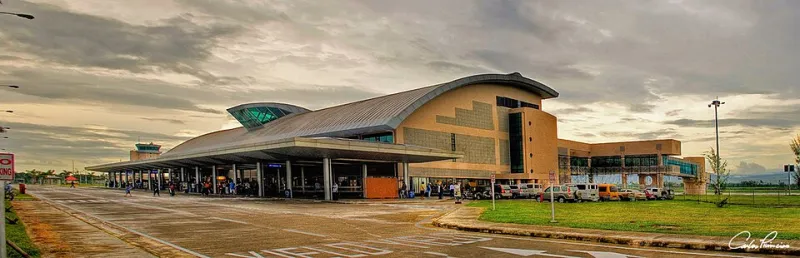
For travelers flying through BCD during this window, the primary concern is not dramatic structural damage — Bacolod-Silay Airport is a modern facility built to current standards — but rather flight disruptions. When a typhoon or tropical storm moves through the Visayas, airlines operating domestic routes will typically suspend or reroute flights as a precaution. Cancellations can cascade across an entire day or more, and rebooking options at a regional airport with limited daily departures are more constrained than they would be at a major hub.
If your travel dates fall between July and October, travel insurance with explicit coverage for weather-related cancellations and trip interruptions is not optional — it is essential. Look for policies that cover missed connections, since a disrupted domestic leg from Manila to Bacolod can ripple into your international itinerary in ways that standard carrier compensation does not fully address.
How Dry Season Transforms Flight Availability at BCD
From November through April, Bacolod-Silay Airport operates at its most predictable and, for most travelers, its most convenient. Airlines tend to increase frequency on key domestic routes — particularly the Manila-Bacolod and Cebu-Bacolod corridors — in response to higher demand from both domestic tourists and international visitors connecting through the major hubs.
This increased capacity has a dual effect on pricing. More seats generally mean more competitive fares during the shoulder portions of dry season (November and early December, as well as March and April). However, the peak holiday window from late December through mid-January and again during Holy Week (March or April, depending on the year) sees prices climb sharply as demand from both the Philippine diaspora and foreign visitors converges. US travelers who book these peak windows six to nine months in advance will consistently pay less than those who wait.
The practical takeaway: if you have flexibility in your schedule, November, early December, and March represent the sweet spot — dry-season weather with dry-season flight availability, but without peak-season pricing.
Wet Season Travel: The Case for Going Anyway
It would be misleading to suggest that the wet season offers nothing to travelers. For US expats and remote workers who have already established themselves in Negros Occidental, the wet months carry a distinct appeal: lower accommodation rates, quieter streets, and a lush, green version of the island that is genuinely beautiful when the rain cooperates.
From a flight-planning perspective, the wet season does not mean constant disruption. The vast majority of travel days between May and October pass without significant weather events. Afternoon rain showers are common but typically brief, and morning flights — which are generally more reliable regardless of season — tend to depart and arrive without issue. The risk is real, but it is not constant.
For those who do choose to visit during the wet months, a few adaptations make the experience considerably smoother:
- Book morning departures whenever possible, as afternoon convective storms are more likely to affect later flights.
- Build buffer days into your itinerary around your departure from BCD, so that a one-day delay does not translate into a missed international connection.
- Monitor PAGASA (the Philippine Atmospheric, Geophysical and Astronomical Services Administration) in the week leading up to your trip, as their forecasts are considerably more accurate for local conditions than international weather apps.
The Festival Calendar and Its Effect on Booking Windows
Negros Occidental's event calendar intersects with its seasonal weather in ways that directly affect both flight demand and accommodation availability. The MassKara Festival, held annually in October in Bacolod City, draws tens of thousands of visitors and creates a notable spike in demand for BCD flights during what is otherwise the tail end of typhoon season. Travelers intending to attend should book flights and hotels at least three to four months in advance and should have contingency plans in place given the weather risk inherent to October travel.
Conversely, the Panaad sa Negros Festival in April falls squarely within the dry season and is somewhat easier to plan around, with more reliable weather and slightly more predictable flight availability — though Holy Week proximity can still compress options in certain years.
Arriving at BCD: Seasonal Differences in the Airport Experience
Bacolod-Silay Airport itself operates consistently throughout the year, but the experience of arriving and departing does shift with the seasons. During peak dry-season months, the terminal sees heavier passenger volumes, and check-in queues and security lines can be noticeably longer than during quieter periods. Arriving at least two hours before a domestic departure — and three hours before an international connection — is advisable during the November-to-April peak.
During the wet season, lower passenger volumes generally mean faster processing times, but the possibility of weather-related delays means that arriving early remains prudent. Bacolod-Silay's terminal facilities are comfortable but compact, and extended waits are more manageable when you have prepared accordingly.
Choosing Your Window
For most US travelers visiting Negros Occidental for the first time, the November to March window offers the most reliable combination of good weather, reasonable fares outside the holiday peak, and full access to the island's outdoor attractions. For experienced travelers, expats, and those drawn by specific festivals, the wet season is entirely navigable with the right preparation. The key in either case is the same: understand the seasonal rhythm before you book, and let that knowledge shape your decisions rather than discovering it after you land.