How Secondary US Markets Are Unlocking a New Economics of Philippines Travel Through Bacolod-Silay

For decades, the calculus of flying from the United States to the Philippines was straightforward, if not always convenient: book a seat to Manila, absorb the crowds at Ninoy Aquino International Airport, and then figure out the connecting leg to wherever you actually wanted to go. That formula is showing its age. A quieter but significant restructuring is underway in transpacific aviation, and Bacolod-Silay Airport sits at the center of it.
Carriers serving mid-sized US cities — markets like Phoenix, Denver, and Austin that major legacy airlines have historically treated as feeder points rather than origin destinations — are finding a compelling financial case for routing Philippines-bound passengers directly through Bacolod-Silay (BCD). The reasons are partly operational, partly geographic, and significantly economic. For travelers willing to look past the familiar, the implications are considerable.
The Cost Structure That Changes Everything
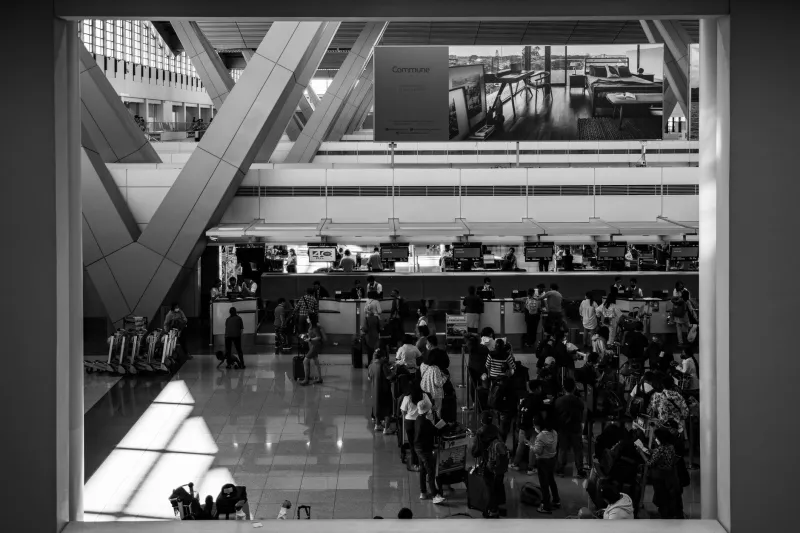
Airport economics are rarely glamorous, but they drive route decisions more than almost any other factor. Landing fees, ground handling costs, terminal gate leases, and turnaround time all factor into an airline's calculation of whether a route is worth flying. By virtually every measure, Bacolod-Silay presents a more favorable cost environment than Ninoy Aquino.
BCD operates at a regional scale. Its runway capacity — upgraded in recent years to accommodate wider-body aircraft — remains meaningfully underutilized compared to Manila's perpetually congested terminals. That underutilization is, counterintuitively, an asset. Airlines negotiating access to BCD face less competition for slots, shorter ground times, and lower gate fees. When those savings are applied across a transpacific route's operating economics, the numbers shift in ways that make previously marginal routes viable.
For a carrier evaluating whether to launch service from Denver International or Austin-Bergstrom, the difference between routing through Manila versus Bacolod-Silay can represent a meaningful per-seat cost reduction. That margin is what turns a speculative route into a scheduled one.
Why Phoenix, Denver, and Austin Matter
The selection of these three cities is not arbitrary. Each represents a distinct category of underserved US market with strong latent demand for Philippines travel.
Phoenix is home to one of the fastest-growing Filipino-American communities in the American Southwest. Despite that demographic weight, direct transpacific options from Phoenix Sky Harbor have historically been thin, forcing travelers into connecting itineraries through Los Angeles or San Francisco — adding hours and cost to journeys that could, in theory, be more direct.
Denver occupies a different position. Its airport is one of the busiest in the country by passenger volume, yet its international long-haul network has lagged behind its domestic reach. The Filipino diaspora in Colorado is smaller than in Arizona, but Denver's role as a connecting hub for travelers from Wyoming, Montana, Utah, and surrounding states gives it an effective catchment area far larger than its immediate metropolitan population suggests.
Austin's case is perhaps the most forward-looking. The city's explosive growth over the past decade has produced a traveler profile — younger, tech-adjacent, internationally mobile — that maps well onto the demographic flying to Negros Occidental for business, remote work, or extended stays. Austin-Bergstrom has been adding international routes aggressively, and the Philippines fits the profile of a destination its passenger base is already seeking.
Disrupting the Manila-Centric Model
The traditional Manila gateway was never purely a matter of geography. It was also a product of airline network design, legacy slot allocations, and the assumption that the Philippines, as a destination, was best served through a single dominant hub. That assumption made sense when Ninoy Aquino was the only airport in the country capable of handling long-haul widebody traffic. It makes considerably less sense today.
Bacolod-Silay's infrastructure improvements have quietly eroded Manila's monopoly on international arrivals. Travelers landing at BCD avoid the notorious congestion of NAIA's terminals, skip the onward domestic connection to Negros Occidental, and arrive in the Visayas region already positioned to reach their final destination within a fraction of the time a Manila routing would require.
For travelers whose ultimate destination is Bacolod, the surrounding sugar country, the beach corridors of Sipalay, or the island day trips accessible from the Negros coast, the time savings compound quickly. A direct BCD arrival can cut total door-to-destination travel time by four to six hours compared to a Manila connection — a difference that registers acutely after a transpacific flight.
The Arbitrage Opportunity for Savvy Travelers
Route economics create pricing dynamics, and pricing dynamics create opportunities. When airlines launch new service on a route, introductory fares are typically set below long-run equilibrium to stimulate demand and build load factors. Travelers who identify and book these inaugural or early-stage routes capture fares that reflect the airline's customer acquisition costs rather than the route's mature market pricing.
The Phoenix-to-BCD and Denver-to-BCD corridors, where service is either newly established or actively under development, represent exactly this kind of window. Travelers who have historically accepted that Philippines travel from interior US cities means premium pricing through Los Angeles or San Francisco may find that monitoring BCD-targeted routes from their home airports produces meaningfully lower fares — sometimes by several hundred dollars on a round-trip basis.
The key is flexibility and awareness. These routes do not always appear prominently in standard search interfaces, which tend to surface the most-booked itineraries rather than the most economical ones. Checking airline websites directly, setting fare alerts for BCD as a destination code, and monitoring announcements from regional carriers active in the Visayas corridor are all strategies that give travelers advance access to competitive pricing before it becomes common knowledge.
What This Means for Your Next Trip
The shift toward secondary US market access at Bacolod-Silay is not a temporary anomaly. It reflects durable changes in airport infrastructure, airline cost structures, and traveler demand patterns that favor regional gateway airports over legacy megahubs. For the US traveler planning a Philippines itinerary, the practical takeaway is clear: the question of which airport to fly into deserves as much attention as the question of which airline to book.
If your destination is Negros Occidental — or anywhere in the Western Visayas region — Bacolod-Silay is no longer simply the alternative to Manila. For a growing number of US departure cities, it is becoming the superior option on every dimension that matters: cost, convenience, and the quality of the arrival experience itself.
The economics have shifted. The routes are being built. The travelers who recognize this early will fly better, spend less, and arrive ready to experience Negros Occidental without the fatigue that a Manila layover reliably delivers.