Rerouting Corporate Philippines: How US Companies Are Building Smarter Operations Through Bacolod-Silay

For decades, Manila served as the default gateway for American businesses entering the Philippines. It was the assumed starting point — the hub through which every executive, delegation, and corporate team passed, often without questioning whether a better option existed. That assumption is now being tested, and in many cases, discarded entirely.
Across industries ranging from business process outsourcing and agriculture to manufacturing and financial services, US companies with sustained operations in the Philippines are rethinking their routing strategies. Bacolod-Silay Airport (BCD), the primary gateway to Negros Occidental, is emerging as the preferred operational hub for organizations that have done the math — and found Manila wanting.
The Manila Problem, Quantified
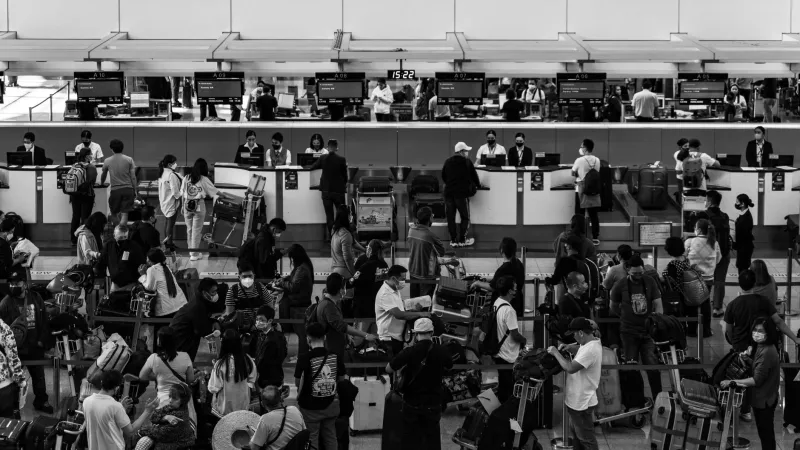
Ninoy Aquino International Airport remains one of the most congested aviation hubs in Southeast Asia. For US corporate travelers, the consequences are tangible and recurring. Terminal transfers between international and domestic flights routinely consume two to three hours. Ground transportation from NAIA to central business districts in Metro Manila can add another one to two hours depending on traffic conditions, which are notoriously unpredictable. Immigration queues during peak periods extend wait times further still.
When a senior executive or a team of consultants arrives after a fourteen-hour transpacific flight, those additional hours are not merely inconvenient — they represent billable time lost, cognitive fatigue accumulated, and scheduling pressure that compounds across an entire itinerary. For companies that send personnel to the Philippines on a quarterly or monthly basis, those losses aggregate into a measurable operational drag.
Bacolod-Silay Airport presents a structurally different proposition. Its regional scale means processing times are faster, ground transit to Bacolod City is direct and predictable, and the overall arrival experience is calibrated for efficiency rather than volume management.
What the Routing Actually Looks Like
US travelers reaching BCD typically connect through Manila, Cebu, or other regional hubs, with Cebu Pacific, Philippine Airlines, and other carriers operating regular domestic connections. For companies already familiar with the Manila connection, the additional domestic leg to Bacolod is often shorter than the ground transfer time they were absorbing within Metro Manila itself.
For organizations based in Negros Occidental — or those whose Philippines partners, suppliers, or facilities are concentrated in the Visayas region — routing through BCD eliminates the Manila detour entirely from a practical standpoint. The traveler arrives closer to where the actual work happens, with less cumulative travel time and a cleaner arrival experience.
Some US companies have also begun timing their Philippines itineraries around BCD's lower-congestion windows, scheduling arrival and departure days to avoid the peak domestic travel periods that affect Manila connections. This level of scheduling precision is easier to execute when the airport itself operates with greater predictability.
Cost Savings Beyond the Airfare
Corporate travel managers evaluating the BCD routing often focus initially on airfare comparisons, but the more significant savings frequently emerge from secondary cost categories.
Hotel costs in Bacolod City run substantially lower than comparable business-class accommodations in Makati or BGC. Per diem rates for meals and ground transportation reflect a regional economy rather than a Metro Manila premium. For companies managing extended project deployments — where personnel may be in-country for two to four weeks — those daily differentials accumulate into meaningful budget reductions.
Meeting and event costs follow a similar pattern. Conference facilities, catering, and support services in Bacolod are competitively priced relative to Manila equivalents, and the city's hospitality infrastructure has matured considerably over the past decade to accommodate business-scale requirements.
For organizations that have already established relationships with local partners in Negros Occidental, the BCD routing also reduces the logistical complexity of in-country movement. Fewer internal transfers, shorter ground distances, and a more navigable urban environment all contribute to a leaner operational footprint.
The Productivity Case
Beyond cost accounting, there is a productivity argument for the BCD routing that resonates strongly with US corporate decision-makers who have experienced both options firsthand.
Arriving at a regional airport with efficient immigration processing, minimal baggage delay, and a short ground transfer to city accommodations means that a traveler who lands in the early afternoon can be functional — attending meetings, reviewing materials, or conducting calls — by mid-afternoon. The same traveler routing through Manila may not reach their hotel until evening, having absorbed hours of transit friction that left them in no condition for substantive work.
Over a five- or seven-day business trip, that recovered productivity on arrival day represents a meaningful return on the routing decision. For companies that track utilization and billable hours carefully, the calculation is straightforward.
Establishing BCD as a Permanent Operational Hub
The companies deriving the greatest benefit from the Bacolod-Silay routing are those that have formalized it as a standard rather than treating it as a one-time experiment. This means updating internal travel policies to designate BCD as the preferred Philippines gateway for Visayas-region operations, briefing travel managers on BCD's connection options and scheduling windows, and building local vendor relationships in Bacolod that support recurring business travel.
Some organizations have gone further, establishing small local offices or permanent partner arrangements in Bacolod City that anchor their Philippines operations to the region rather than defaulting to Manila-centric coordination. This structural shift reinforces the routing logic — when the operational center of gravity moves to Negros Occidental, the airport serving that region naturally becomes the primary gateway.
Practical Considerations for the First Routing Change
For US corporate travelers making the transition to BCD for the first time, a few practical notes are worth keeping in mind.
Domestic connections from Manila to Bacolod operate multiple times daily, with flight times typically under an hour. Cebu also serves as a connection point for travelers whose international routing passes through that hub. Ground transportation from BCD to Bacolod City is direct and well-organized, with hotel transfers and car hire services readily available at the terminal.
Business travelers should confirm that their company's travel insurance and duty-of-care protocols cover the BCD routing, as some older corporate policies were written with Manila as the assumed Philippine gateway. This is a simple administrative update that most travel managers can complete quickly.
Finally, companies scheduling their first BCD-routed trip should build modest schedule flexibility into their arrival day, particularly if the itinerary involves same-day meetings. While BCD's efficiency advantage over Manila is well-established, international travel carries inherent variability, and a buffer between arrival and first engagement remains sound planning practice regardless of which airport is used.
A Strategic Shift Worth Examining
The movement of US corporate travel toward Bacolod-Silay Airport reflects something broader than a preference for a quieter terminal. It reflects a maturation in how American businesses think about their Philippines operations — one that prioritizes measurable efficiency over inherited assumptions about how travel to the country must be structured.
For organizations still routing all Philippines business through Manila by default, the question worth asking is whether that default has ever been examined against the alternative. For many, the examination leads to a straightforward conclusion: BCD offers a genuinely superior framework for business travel, and the case for making it the standard gateway is stronger than most corporate travel managers initially expect.