Through Customs in Minutes, Not Hours: The Practical US Traveler's Guide to BCD's Immigration Advantage
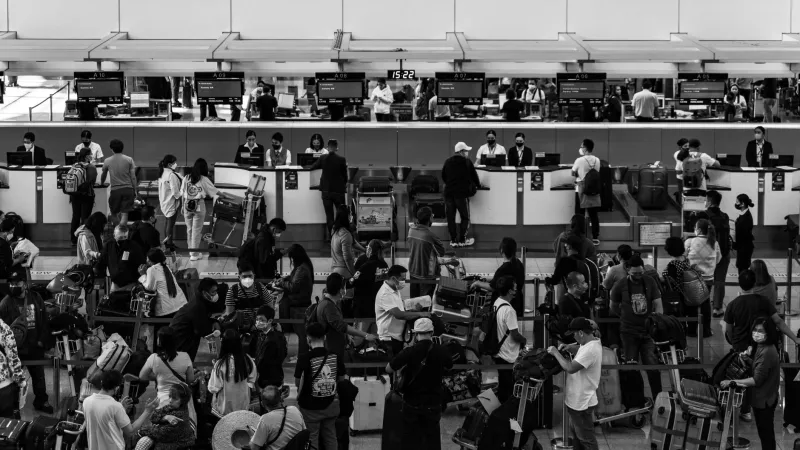
For most Americans flying into the Philippines for the first time, the arrival experience at Ninoy Aquino International Airport (NAIA) in Manila sets the tone — and not in a welcome way. Lines stretching past the roped barriers, immigration counters staffed unevenly, baggage carousels backed up, and the ambient stress of thousands of passengers funneling through a facility that was never designed to handle its current volume. It is, by nearly every measure, an exhausting introduction to a beautiful country.
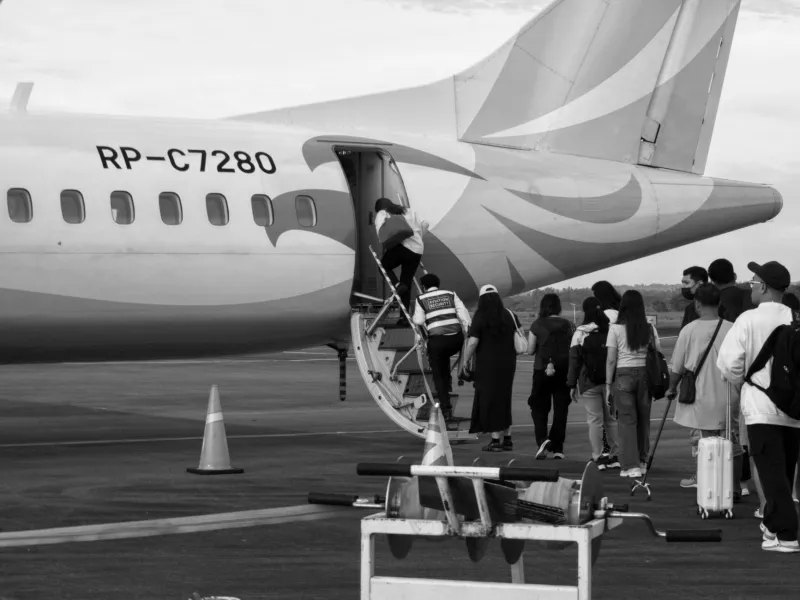
Bacolod-Silay Airport tells a different story. Passengers who route their Philippines itinerary through BCD — whether arriving via a connection from Cebu, Manila, or through regional carriers — consistently report clearing the full arrivals process in a fraction of the time. That gap is not accidental. It is the direct result of how a smaller, purpose-built regional facility operates under far less systemic pressure.
This guide explains the mechanics behind that advantage and gives US travelers the practical knowledge to make the most of it.
Why Terminal Size Is About More Than Square Footage
When aviation professionals talk about airport capacity, they are rarely discussing physical space alone. The more consequential metric is throughput — how many passengers a facility can process per hour without its systems degrading. NAIA, handling upward of 40 million passengers annually across multiple terminals, operates in a state of near-perpetual saturation. Every arriving international flight deposits hundreds of passengers into queues that were already moving slowly before that aircraft touched down.
Bacolod-Silay, by contrast, handles a fraction of that volume. Its single passenger terminal serves a defined regional catchment area, and the number of arriving flights at any given time rarely creates the compounding backlog that characterizes Manila's busiest hours. Immigration officers at BCD are processing passengers from one or two arriving aircraft simultaneously — not ten.
The practical result: passengers clearing BCD immigration typically report wait times in the range of 10 to 25 minutes from deplaning to baggage retrieval. At NAIA Terminal 1 during peak hours, the same process can stretch past 90 minutes without any unusual disruptions.
What the Immigration Process Actually Looks Like at BCD
US travelers arriving at Bacolod-Silay for the first time should expect the following sequence:
Deplaning and terminal transit. The walk from the aircraft to the immigration hall is short. BCD does not operate the extended bus transfers or remote stand arrangements that add time and complexity at larger hubs. In most cases, you are inside the terminal and approaching the immigration counters within five to ten minutes of the aircraft door opening.
Immigration counters. Officers process arrivals from domestic and international connecting flights. For US passport holders, the standard 30-day visa-on-arrival is the most common entry scenario. Have your passport, a return or onward ticket confirmation, and proof of accommodation ready. Officers at BCD are generally efficient and thorough, but the absence of a 200-person queue behind you means the interaction is less hurried and more professional in tone.
Baggage claim. BCD's baggage handling area is compact and well-organized. Bags from connecting flights typically appear on the carousel within 15 to 20 minutes of landing. There is minimal ambiguity about which carousel corresponds to which flight — a small detail that eliminates the confusion common at multi-terminal hubs.
Bureau of Customs. The customs declaration process at BCD follows standard Philippine Bureau of Customs procedures. US travelers should complete their Customs Declaration Form accurately, declaring any items of value, currency over the threshold, or goods that may require inspection. The volume of passengers moving through the customs area at BCD means that even when spot inspections occur, the overall flow is not significantly disrupted.
Documentation: What to Have Ready Before You Land
Preparing your paperwork in advance is the single most effective thing a US traveler can do to ensure a smooth passage through any immigration facility. At BCD, the process is already faster than most alternatives — but being organized makes it faster still.
- Valid US passport with at least six months of validity beyond your intended departure date from the Philippines
- Completed arrival card, which is typically distributed on your inbound flight or available at the immigration hall
- Proof of onward or return travel — a printed or digital confirmation of your departing flight
- Accommodation details — a hotel confirmation or address of where you will be staying in Negros Occidental
- Customs Declaration Form, completed honestly and in full
If you are extending beyond the standard 30-day visa-on-arrival, be aware that extensions are handled through the Bureau of Immigration office in Bacolod City, not at the airport itself. Plan accordingly.
Timing Your Arrival to Maximize the Advantage
Even at a smaller airport, arrival timing matters. BCD's busiest windows generally correspond to the arrival of connecting flights from Manila and Cebu during morning and early afternoon hours. If you have flexibility in your itinerary, arriving on a mid-afternoon or evening connection can mean an even more relaxed immigration experience.
Weekday arrivals tend to move more efficiently than weekend arrivals, which can see increased leisure travel volume. Major Philippine holidays — particularly Holy Week and the Christmas season — bring elevated passenger numbers across all domestic routes, including those serving BCD. If your trip falls during these periods, build a small buffer into your post-arrival plans.
The Traveler Experience: What Americans Are Saying
US travelers who have transited through both Manila and BCD frequently describe the contrast in strikingly similar terms. The recurring theme is not simply speed — it is the absence of the low-grade stress that accumulates during a long, uncertain immigration wait. Knowing that the process will conclude in a predictable and reasonable timeframe changes the psychological experience of arrival entirely.
For American business travelers coordinating tight schedules in Negros Occidental, that predictability has real economic value. A confirmed 20-minute clearance window is a scheduling asset. A 90-minute window with a 40-minute variance is a logistical liability.
For leisure travelers — particularly those arriving after a long transpacific journey — the ability to clear customs, collect luggage, and be en route to their accommodation within 30 to 40 minutes of landing represents a genuinely meaningful improvement in travel quality.
Using the Advantage as a Strategic Planning Tool
The efficiency of BCD's customs and immigration process is not just a pleasant surprise — it is something US travelers can actively build into their itinerary design. If you are visiting multiple Philippine destinations, structuring your trip so that Negros Occidental serves as your entry or exit point can reduce cumulative airport stress significantly.
For those considering Bacolod as a regional base rather than a single stop, the airport's operational consistency becomes an ongoing benefit rather than a one-time convenience. Every arrival and departure through BCD carries the same structural advantages: manageable queues, attentive staffing, and a facility scaled to serve rather than overwhelm.
Your gateway to Negros Occidental was designed with regional travelers in mind. As it turns out, that design philosophy delivers something that no amount of airport expansion in Manila has managed to replicate: an arrival experience that begins your trip on the right note.