The Human Factor: How BCD's Regional Scale Quietly Delivers Superior Airline Service for US Travelers
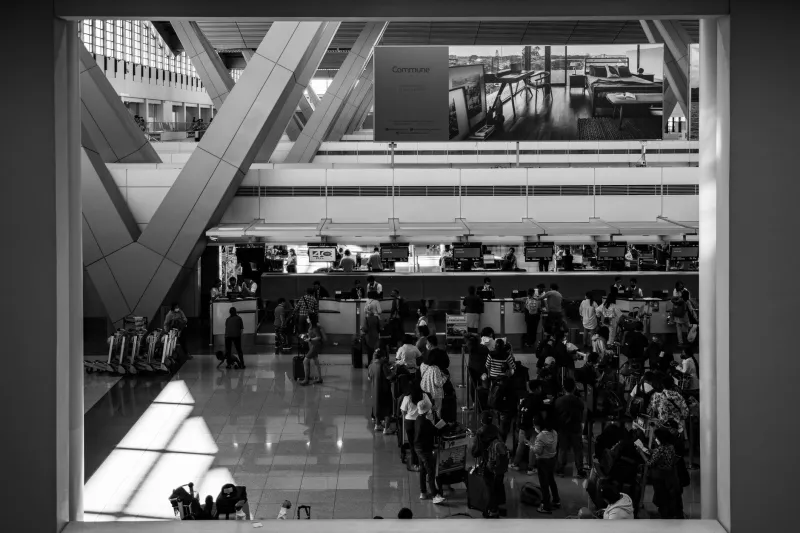
Anyone who has spent an afternoon in Terminal 4 at JFK — hunting for a gate agent willing to make eye contact, let alone rebook a missed connection — understands that airline customer service at large hubs is less a feature than a rumor. The math is brutal: thousands of passengers, dozens of simultaneous departures, and a ground crew that is perpetually outnumbered.
Bacolod-Silay Airport (BCD) operates on a fundamentally different ratio. The airport handles a fraction of the daily volume that Metro Manila's Ninoy Aquino International Airport processes, and that gap in scale translates directly into something US travelers rarely associate with international flying: attentive, personalized, and genuinely effective customer service.
This is not a matter of luck or hospitality culture alone, though Negros Occidental's reputation for warmth certainly plays a role. It is a structural advantage built into the airport's operational model — and it is one that US passengers routing through BCD are increasingly coming to appreciate.
Tenure Matters More Than Most Travelers Realize
At major hub airports, frontline airline staff often cycle through roles quickly. High passenger volume creates high stress, and turnover rates at large commercial airports in the United States and the Philippines alike can be significant. The result is a workforce that is frequently in training, frequently overwhelmed, and rarely in a position to exercise the kind of judgment that resolves a complicated situation quickly.
BCD tells a different story. Because the airport serves a defined regional market and operates at a human scale, airline ground staff tend to stay longer. Employees who have worked the same counters and gates for several years develop institutional knowledge that simply cannot be replicated by a procedures manual. They know which connecting flights have realistic buffer time. They understand the quirks of baggage handling on the Cebu-to-Bacolod leg. They recognize repeat passengers — including the growing number of American expats and frequent visitors who make this route a regular part of their travel calendar.
Tenure also means familiarity with escalation paths. A seasoned check-in agent at BCD who has handled hundreds of irregular operations knows exactly which supervisor to call, which form to file first, and how to move a resolution forward before a passenger has finished explaining the problem.
Baggage Handling: Where the Difference Becomes Measurable
Lost, delayed, and mishandled baggage is one of the most consistent sources of frustration for US international travelers. According to aviation industry tracking data, the highest rates of baggage irregularities tend to cluster at the world's busiest airports — not because of carelessness, but because of volume and the complexity of multi-carrier handoffs at congested facilities.
Regional airports like BCD benefit from simpler operational flows. Fewer simultaneous flights mean fewer opportunities for bags to be loaded onto the wrong aircraft or left behind on a tight turn. Ground crews handling a manageable number of departures can exercise greater care at each stage of the process, from check-in tagging through to ramp loading.
When irregularities do occur, the resolution timeline at BCD tends to be shorter. Passengers dealing with a missing bag at a major hub often find themselves navigating a phone queue or an online claim portal, with no direct human contact for days. At BCD, the same situation is more likely to involve a direct conversation with a staff member who has both the authority and the motivation to locate the bag and arrange delivery promptly. The feedback loop between the passenger and the person with the ability to act is simply shorter.
The Check-In Experience: Less Queue, More Conversation
For US travelers accustomed to self-service kiosks and minimal human interaction at domestic airports, the check-in experience at BCD can feel almost anachronistically personal — in a good way.
Because BCD processes fewer passengers per hour than a major hub, check-in agents have the time to review itineraries carefully, flag potential issues before they become problems, and answer questions that go beyond the transactional. A traveler with a complicated routing — perhaps arriving from Los Angeles via a connection in Seoul or Hong Kong before landing at BCD — can expect a check-in agent who will actually look at the full itinerary rather than simply scanning the boarding pass for the immediate leg.
This matters particularly for US passengers who may be navigating Philippine domestic connections for the first time, or who are traveling with oversized luggage related to medical equipment, sports gear, or extended-stay supplies. The ability to have a genuine, unhurried conversation with an informed agent at the outset of a journey can prevent a cascade of problems downstream.
Carrier Relationships and Accountability at the Regional Level
Another structural advantage worth noting is the relationship between airlines and airport management at smaller facilities. At a major international hub, an individual carrier is one of dozens competing for gates, ground crew resources, and operational priority. Accountability can diffuse quickly across that complexity.
At BCD, the airlines serving the airport operate within a tighter community of stakeholders. Airport management, ground handlers, and airline operations teams interact more frequently and more directly. When service standards slip, the feedback reaches decision-makers faster. When a carrier consistently performs well, that reputation builds in a way that incentivizes continued investment in staff quality and training.
For US travelers, this translates into a more consistent baseline experience. The variability that characterizes service at large hubs — where a traveler's experience can differ wildly depending on which agent happens to be on shift — is less pronounced at BCD.
Practical Takeaways for US Passengers
If you are planning a trip to Negros Occidental and routing through Bacolod-Silay Airport, there are a few ways to take full advantage of the service environment BCD offers.
Arrive with questions. The check-in and information desks at BCD are staffed by people who have time to engage. If you have uncertainty about your onward connection, your baggage allowance, or local transportation, this is a better moment to ask than at a crowded hub.
Register your contact details carefully. In the event of a flight irregularity, BCD-based airline staff are more likely to proactively reach out to affected passengers than their counterparts at high-volume airports. Ensuring your phone number and email are accurately recorded in your booking gives that system somewhere to direct its attention.
Allow yourself to be helped. US travelers, trained by years of impersonal hub experiences, sometimes assume that asking for assistance is futile. At BCD, that assumption is worth setting aside. The staff here are often genuinely able to act on requests that would disappear into a queue elsewhere.
A Different Kind of Airport Experience
The advantages of flying through Bacolod-Silay Airport are not always visible on a comparison spreadsheet. They do not show up in the amenity lists that dominate airport ranking articles. But for the US traveler who has spent too many hours waiting for a callback from an airline's 1-800 number, they are the kind of advantages that register immediately and lastingly.
At BCD, the human scale of operations is not a limitation to be apologized for. It is the mechanism through which better service becomes possible. In an era when the airline industry's relationship with its customers has grown increasingly transactional, that is a distinction worth flying toward.