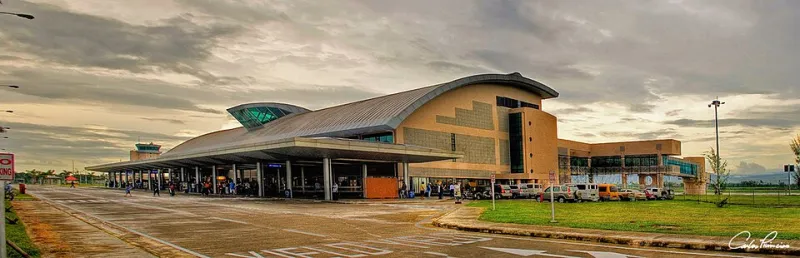
Extend Your Stay, Simplify Your Strategy: Why US Expats Are Making Bacolod-Silay Their Visa Run Hub
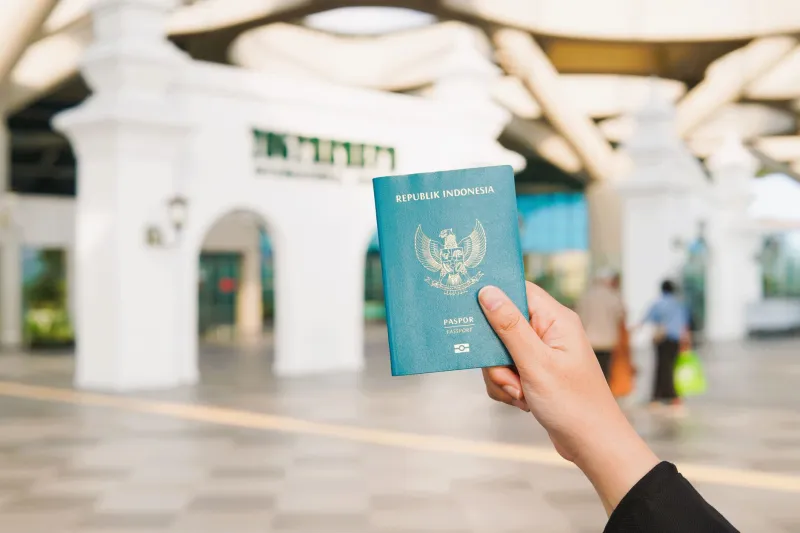
For the growing community of American expats, remote workers, and long-term travelers who have made the Philippines their adopted home, one administrative reality never entirely disappears: the visa run. Whether you are living in Bacolod on a series of tourist visa extensions or simply navigating the Philippines' immigration framework while you weigh longer-term residency options, departing and re-entering the country remains a periodic obligation. What has changed in recent years is where many US citizens are choosing to execute that strategy — and increasingly, the answer is Bacolod-Silay Airport.
This regional hub, serving Negros Occidental and the broader Western Visayas corridor, has emerged as a genuinely practical alternative to Manila's Ninoy Aquino International Airport for travelers managing immigration cycles. The reasons are both logistical and financial, and they compound meaningfully over time for anyone spending months rather than weeks in the country.
Understanding the Philippine Visa Framework for US Citizens
American passport holders enjoy visa-free entry to the Philippines for an initial stay of up to 30 days, with the option to extend that period through the Bureau of Immigration. Extensions can be applied for consecutively, theoretically allowing stays of up to 36 months before a departure and re-entry becomes necessary — though most long-term residents opt for more frequent exits to avoid accumulating fees and administrative complexity.
The standard tourist visa extension process involves visiting a Bureau of Immigration office, paying applicable fees, and waiting for processing. Bacolod City's Bureau of Immigration office, located conveniently within the urban core, handles these applications efficiently and with considerably shorter queues than the Manila main office, which is notorious among expats for its crowded waiting areas and unpredictable processing times.
For US citizens who have exhausted their extension runway or simply prefer the clean slate of a border exit and re-entry, the visa run remains the most straightforward path to resetting the clock.
Why Bacolod-Silay Airport Changes the Calculus
The conventional wisdom among Manila-based expats has long positioned NAIA as the default departure point for visa runs. That assumption deserves scrutiny, particularly for anyone already living in or near Bacolod.
Bacolod-Silay Airport (IATA: BCD) connects to Manila's hubs via frequent Cebu Pacific and Philippine Airlines services, but more relevantly for visa run logistics, it also feeds into the regional flight network that links the Visayas to international departure points. Cebu, which serves as a secondary international gateway with its own connections to Singapore, Hong Kong, Kuala Lumpur, and other regional destinations, is reachable from Bacolod via a short inter-island flight. For travelers whose nearest international connection runs through Cebu rather than Manila, the total journey time and cost profile can shift considerably in their favor.
Beyond routing efficiency, the airport experience itself matters. US travelers who have transited through NAIA during peak periods understand the friction involved — long security lines, crowded terminals, and the ambient stress of navigating one of Southeast Asia's busiest airports on a tight connection. BCD's regional scale delivers a calmer, more predictable environment that reduces the logistical overhead of what is already an administrative errand.
Recommended Destinations for the Efficient Visa Run
Not all border exits are created equal. US expats operating out of Bacolod have identified several neighboring countries that balance cost, visa-on-arrival accessibility, and flight frequency from regional Philippine gateways.
Singapore remains the gold standard for many American travelers. The city-state offers visa-free access for US passport holders, a world-class airport transit experience, and flights from Cebu that can be booked affordably with sufficient lead time. A Singapore run typically costs between $150 and $300 round-trip from Cebu, depending on timing and carrier, and allows for a clean 24- to 48-hour turnaround.
Kuala Lumpur presents a compelling budget alternative. AirAsia's extensive network makes KL one of the most economically accessible destinations from Cebu, with round-trip fares occasionally falling below $100 during promotional windows. Malaysia offers visa-free entry for US citizens for up to 90 days, and the cost of a short stay in KL is manageable even for travelers on conservative budgets.
Hong Kong appeals to expats who prefer a destination with a dense transit infrastructure and reliable onward connections. Cathay Pacific and Cebu Pacific both operate the Cebu-Hong Kong route, and the city's status as a financial hub means last-minute fares are often available.
Taipei has gained traction among US expats in recent years, particularly those who appreciate Taiwan's relatively affordable dining scene and the ease of navigating Taoyuan International Airport. US citizens receive visa-free entry for up to 90 days, making Taiwan a viable destination for a slightly longer reset.
Cost Comparison: Bacolod-Based vs. Manila-Based Visa Runs
The financial case for executing a visa run from Bacolod rather than relocating to Manila for the exercise is more compelling than it might initially appear.
A Manila-based visa run typically involves either relocating temporarily to the capital — with associated accommodation costs in a city where mid-range hotels run $40 to $80 per night — or booking a domestic connection from your Visayas base to NAIA before proceeding internationally. The latter approach adds a domestic leg to an already multi-segment journey.
By contrast, a Bacolod-based traveler can connect to Cebu in approximately 45 minutes by air, access international departures from Mactan-Cebu International Airport, and return to BCD with a total door-to-door cycle that avoids Manila entirely. For expats whose lives and accommodations are rooted in Negros Occidental, this routing preserves both time and money.
Over the course of a year, with two or three visa run cycles, the savings from avoiding Manila's accommodation costs and the added domestic leg can amount to several hundred dollars — a meaningful figure against the backdrop of the region's famously low cost of living.
The Broader Context: Building a Life in Negros Occidental
The visa run is, for many US expats, a symptom of a larger strategic question: how to build a sustainable, legal long-term presence in the Philippines without committing prematurely to a formal residency visa. Bacolod and the surrounding region have become attractive precisely because they offer the infrastructure of urban life — reliable internet connectivity, quality healthcare, a vibrant restaurant scene — at a fraction of the cost of Manila or Cebu City.
For US citizens evaluating whether to pursue a Special Resident Retiree's Visa (SRRV) through the Philippine Retirement Authority or simply continue managing extensions and periodic exits, the local Bureau of Immigration office in Bacolod is a valuable first point of contact. Staff there are accustomed to assisting foreign nationals navigating their options and can provide current guidance on documentation requirements.
Practical Considerations Before You Depart
A few logistical notes for US travelers planning a visa run through Bacolod-Silay Airport. Confirm your onward international ticket is booked before arriving at BCD, as Philippine immigration officers may request proof of onward travel at the point of departure. Ensure your US passport has at least six months of validity beyond your intended return date. Keep documentation of your current visa status — including any extension receipts — accessible in your carry-on.
For travelers who have been in the Philippines for an extended period, the Bureau of Immigration may require an Emigration Clearance Certificate (ECC) before departure; this applies to foreign nationals who have been in the country for six months or longer. Processing this document in Bacolod, rather than in Manila, is generally faster and less disruptive.
Barangay-level logistics aside, Bacolod-Silay Airport remains one of the more underutilized strategic assets available to US citizens navigating long-term life in the Philippines. For those already based in Negros Occidental, it is simply the most sensible starting point for whatever comes next.